
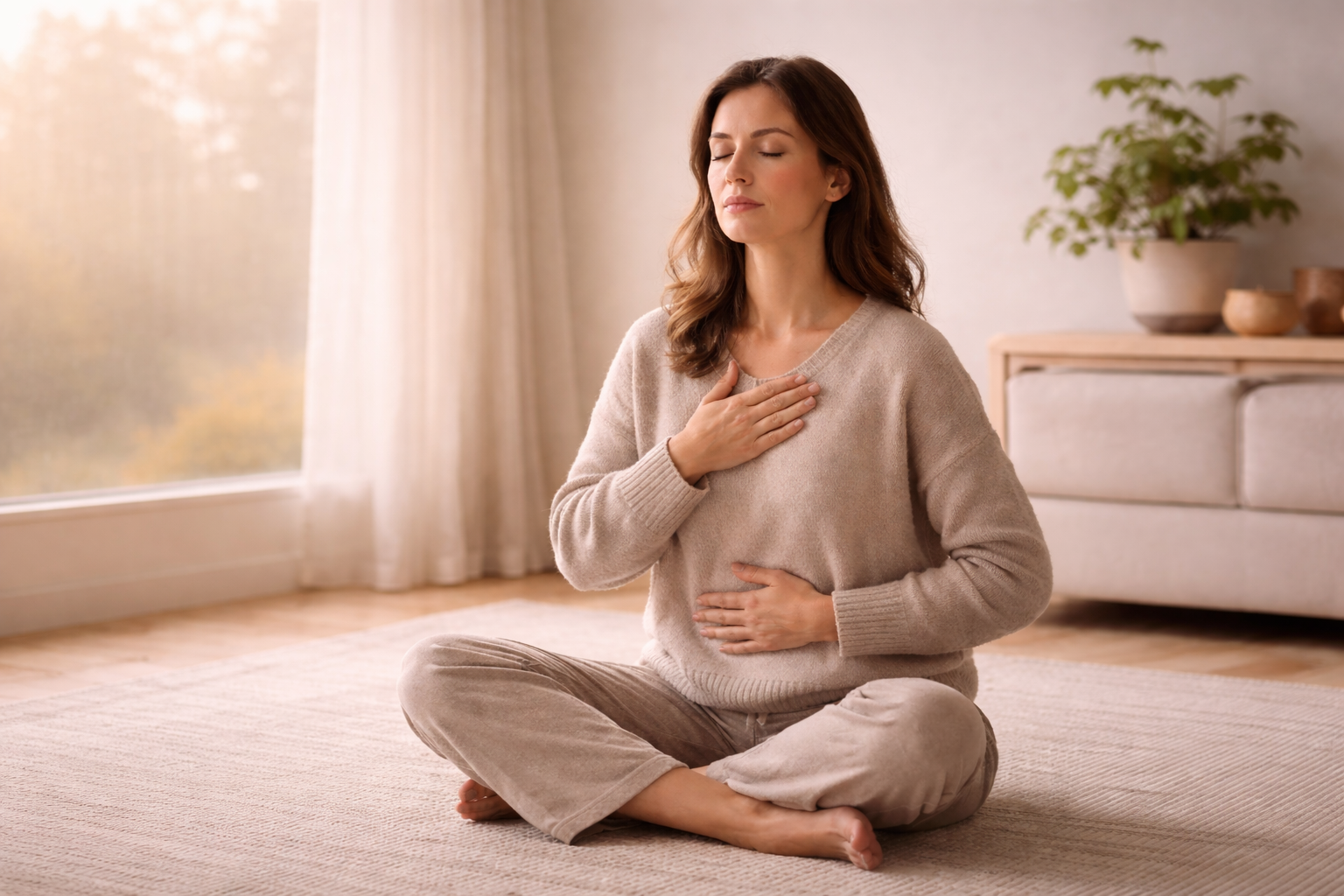
In times of stress and global conflict, anxiety and fear naturally rise. This is not something to resist or judge. It is part of being human.
When the external world becomes unstable, the body and the psyche respond instinctively. Something in us becomes alert, watchful, scanning for what might happen next. You are not overreacting. Your system is doing exactly what it is designed to do.
In Jungian terms, when the outer world feels unpredictable, the psyche begins searching for safety within. The task is not to eliminate fear, but to stay grounded enough so that it does not take over.
There are simple ways to support yourself through this, not by forcing calm, but by gently guiding the body back into a state of regulation.
One of the most immediate ways to do this is through the senses, bringing yourself back into the present moment rather than into imagined futures.
The 5 4 3 2 1 sensory method
5 things you can see
4 things you can touch
3 things you can hear
2 things you can smell
1 thing you can taste
This anchors your awareness in what is actually here, rather than what the mind is projecting.
Sometimes the body needs something more direct. A physical shift can interrupt the stress response almost instantly.
Temperature reset
Splash cold water on your face
Hold an ice cube
Place a cool pack on your neck
These small actions activate a reflex that helps slow the heart rate and signal safety to the body.
At other times, what you may notice is a kind of restless energy. Anxiety mobilizes the body, and if that energy has nowhere to go, it intensifies.
Grounding through movement
Walk slowly and feel each step
Stretch your body gently
Press your feet firmly into the ground
Movement allows the body to complete what it has started.
There is also something deeply regulating in touch, even when it comes from yourself. The body responds to contact in ways the mind often cannot.
Self soothing touch
Place a hand on your heart
Hold your own hands
Gently rub your arms
Or hug someone you trust
This is a quiet way of reminding the nervous system that you are not alone.
When the mind becomes louder, more insistent, it can help to engage it in something simple and structured.
Counting and rhythm
Count backwards from 100 by 3
Tap your fingers in a steady rhythm
Match your breath to counting
This gently interrupts anxious loops and brings you back into a steadier internal rhythm.
Breath, of course, is one of the most direct pathways into the nervous system. The way you breathe sends constant signals to the body about whether you are safe.
Extended exhale breathing
Inhale for 4, exhale for 8
Inhale for 4, hold for 4, exhale for 6
Or take a deep inhale followed by a long audible exhale
A longer exhale tells the body that there is no immediate threat.
And sometimes, the most powerful thing is simply to pause and notice.
Micro presence practice
Pause for a few moments
Ask yourself what is happening inside me right now
Notice without trying to change anything
In Jungian language, this is the beginning of awareness, allowing what is within you to be seen rather than pushed away.
Alongside these practices, it becomes important to be conscious of what you are exposing yourself to.
Constant consumption of distressing news keeps the system in a state of alarm. While it is important to stay informed, overexposure does not create safety, it amplifies anxiety. Limiting how often you check the news, and choosing reliable sources, creates space for your mind to settle.
Connection also matters more than we often realise.
Stress intensifies in isolation. Speaking to someone you trust, even briefly, can shift your internal state. There is something regulating about being heard, about sharing what is happening inside you instead of holding it alone.
At the same time, small routines can become anchors.
A morning coffee, a walk, a consistent rhythm to your day. These simple, repeated actions begin to restore a sense of order when everything else feels uncertain.
When thoughts start to loop, it helps to give them somewhere to go.
Writing down what is on your mind, without filtering or editing, creates distance. It allows you to see your thoughts rather than be fully inside them.
It is also worth remembering that not everything you are feeling is entirely yours.
We are deeply receptive to the emotional atmosphere around us. In times like this, anxiety can be collective. Jung spoke about the shared layer of the psyche that we all participate in. Sometimes what you are carrying is not just personal fear, but something larger moving through the environment.
You are allowed to step back from that.
To create space.
To return to yourself.
Focusing on what you can control, even in very small ways, helps restore a sense of stability. Simple actions, maintaining your routine, preparing what you need, staying present with what is in front of you. These things matter more than they seem.
And when the mind moves into what if scenarios, as it inevitably will, you can gently bring yourself back by noticing
This is a future thought
It is not happening right now
That small shift can be enough to return you to the present.
If at any point the anxiety begins to feel overwhelming, affecting your sleep, your ability to function, or creating panic, it is important to reach out for support. Speaking to a therapist or a doctor is not a sign of weakness. It is a form of awareness and care.
In moments like this, grounding is not about removing fear.
It is about staying connected to yourself, even in the presence of it.
And that is where a deeper sense of stability begins.